
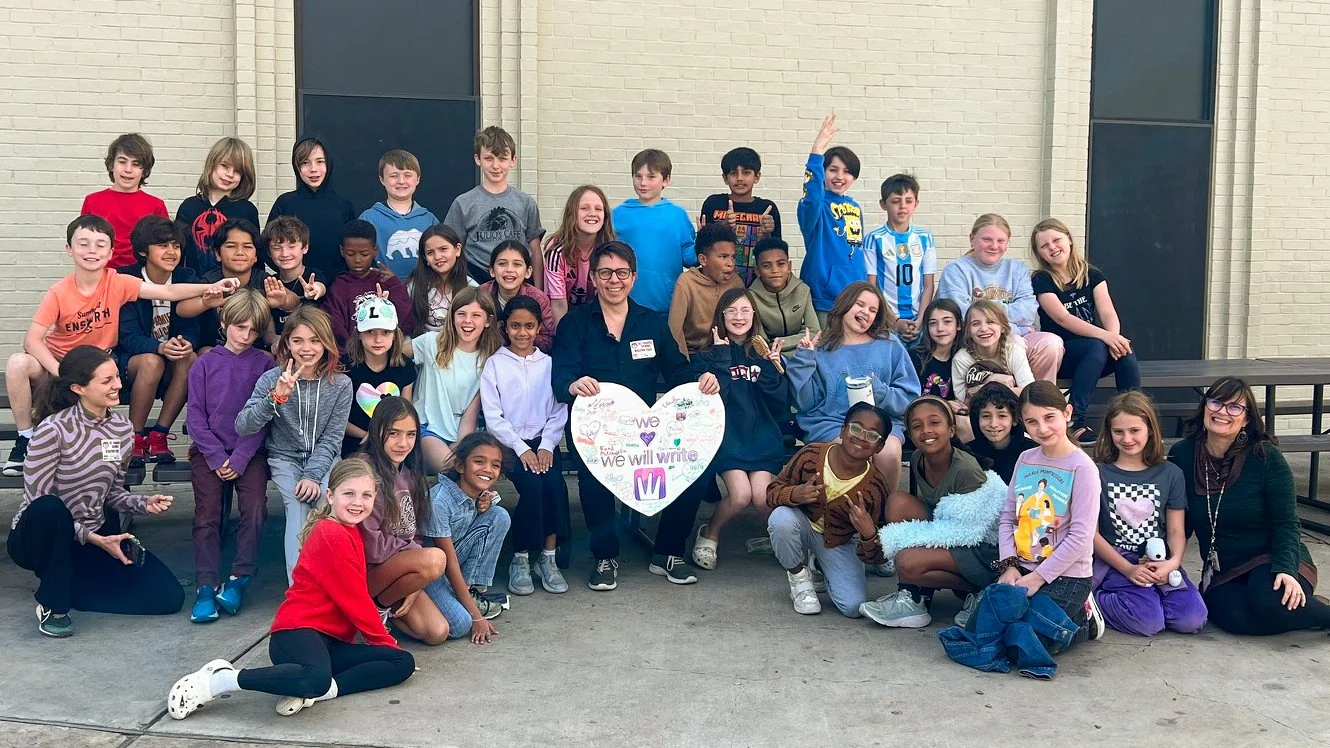
Why short, social writing works
Writing is thinking. A student who writes a sentence must decide what they mean. Which words to keep and which to leave out. This is the work. Anything that takes the work away, takes the learning away.
It is not about making writing easier. It is about making students want to do more of it.
Writing is thinking. A student who writes a sentence must decide what they mean. Which words to keep and which to leave out. This is the work. Anything that takes the work away, takes the learning away.
It is not about making writing easier. It is about making students want to do more of it.
Why short, social writing works
Our learning principles
Guided by educational science, our principles provide focus and direction. They come from people who have taught and they were tested with real classes across two school years.

Social
Students learn faster through quick tasks and frequent feedback from peers and teachers. Peer recognition boosts intrinsic motivation and extends what a student can manage with help, which Vygotsky called the zone of proximal development.4 Turning students' own texts into the examples the class discusses is what closes the gap between theory and practice.
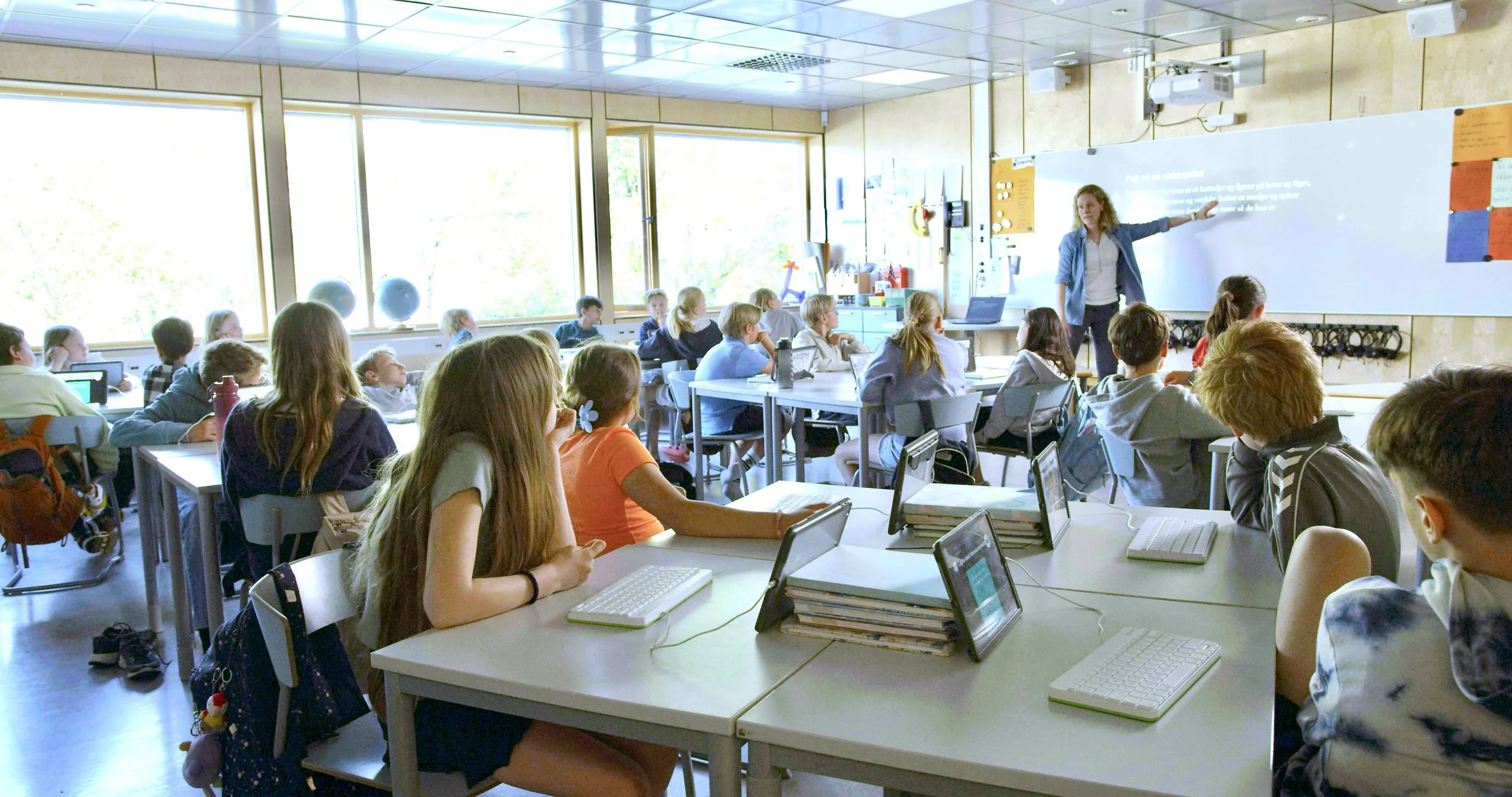
Safe
Students adopt positive behaviors and take part when they are not threatened by failure or ridicule, which is Bandura, Freire and Rogers on psychological safety. Anonymity and team play make it safer to put an idea forward, to get it wrong and to accept criticism. Teachers need to feel safe too, which is what the filtering and monitoring tools are for.
Playful
Creativity and flexibility come from doing rather than being told, which is Dewey's learning by doing. Bruner's spiral means the same concepts return with more depth each time, so repetition inside a game holds knowledge in place without going dull. Writing class should be playful for the teacher as well. Enthusiasm is contagious.
Closing the writing gap
Closing the writing gap
The last national writing assessment found 73% of students writing below a proficient level.6 What shifts that is students being seen. When effort, progress and strategy get noticed, motivation follows.7
The last national writing assessment found 73% of students writing below a proficient level.6 What shifts that is students being seen. When effort, progress and strategy get noticed, motivation follows.7
Read more
Our school serves a number of neurodiverse learners, and writing instruction has historically been challenging with our population. WeWillWrite has strengthened our overall support system by allowing reluctant writers to remain in class with their peers.
Learning Center Coordinator, Texas
Practice beats instruction.
Students get better at writing by writing often, not by being told how.1 Short sessions run weekly add up to far more words than a long assignment run once a term.
Low stakes get more words.
When a piece of writing is not graded and not signed, the students who normally freeze start writing.2 The cost of a bad sentence drops to nothing, so they risk a good one.
An audience changes the writing and everyone is in it.
Students write differently when classmates will read it than
when only a teacher will.3 They are writing to be
understood rather than to be marked, which is what writing is
for.
And the audience is the whole class. Texts are read without
names attached, so a struggling writer's work is judged on the
writing. Working alongside stronger peers, a student writes
above the level they would reach alone.4
The teacher does the teaching.
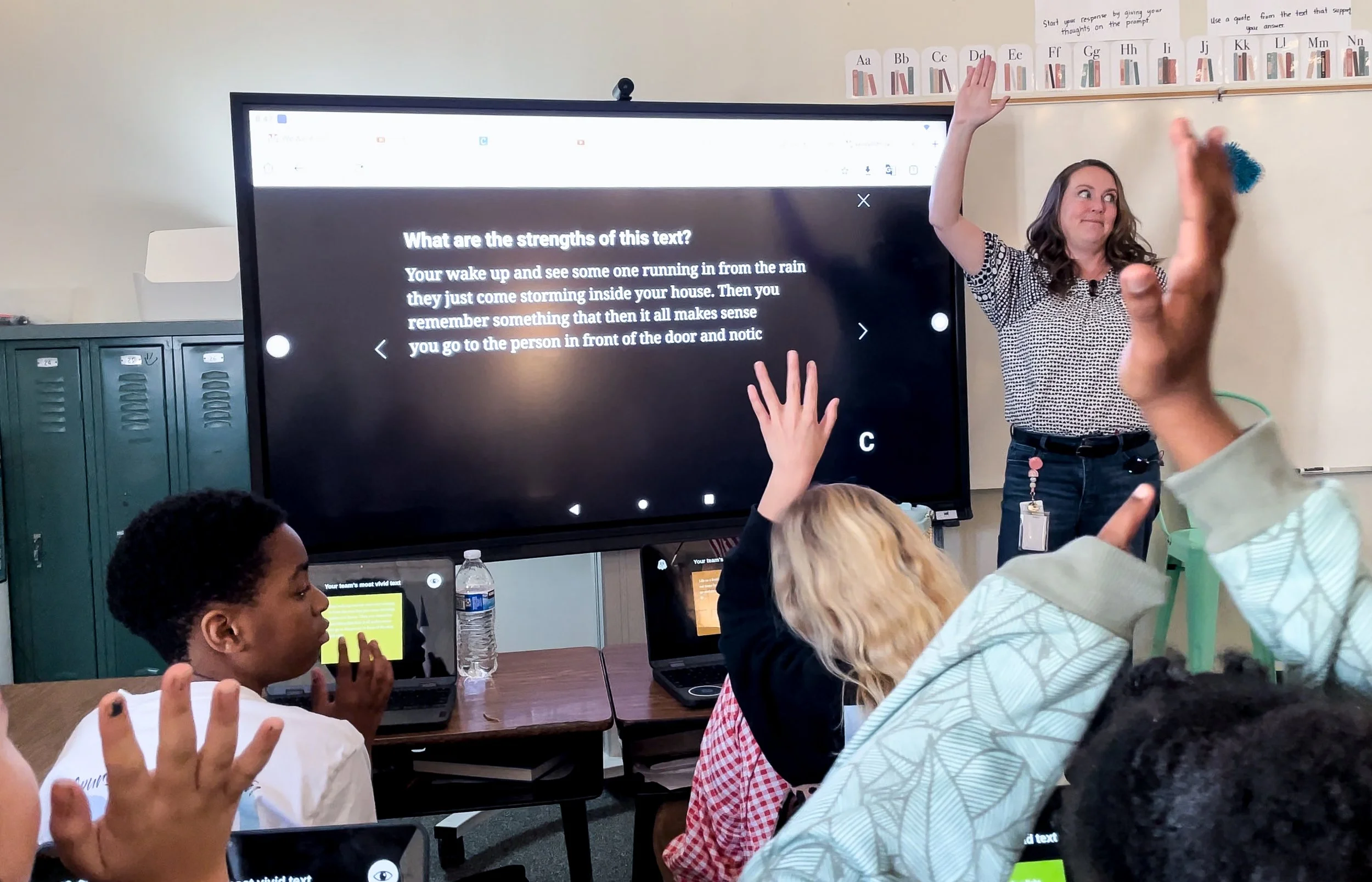
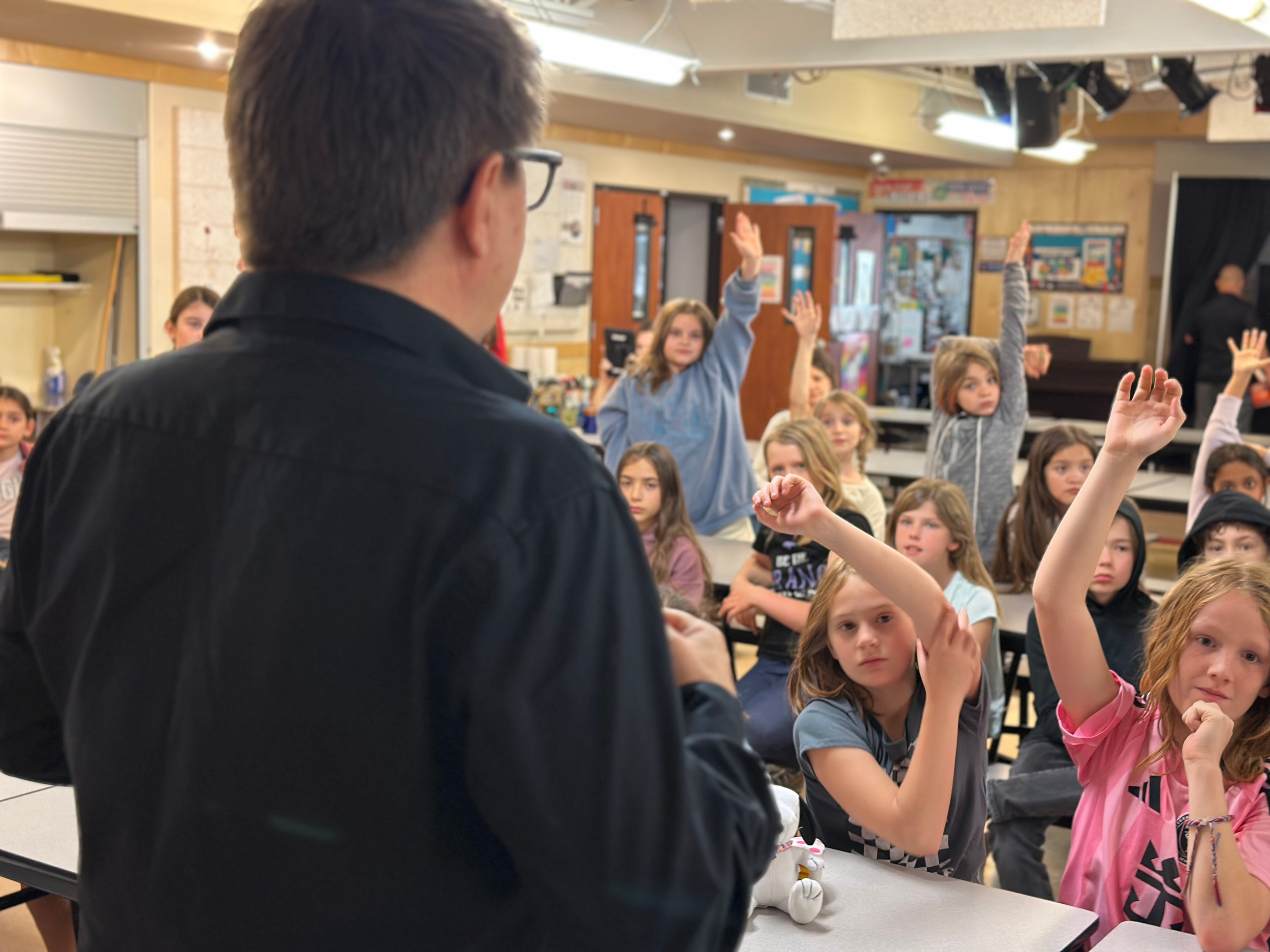
The tool runs the session. It does not assess and it does not decide what good writing is. The five minutes after the timer stops, when the class discusses which words sounded good, is the lesson. That part is yours.5
What that looks
like in a lesson
What that looks like in a lesson
References
References
Graham, S., & Perin, D. (2007). Writing Next: Effective Strategies to Improve Writing of Adolescents in Middle and High Schools.
Kiuhara, S. A., Graham, S., & Hawken, L. S. (2009). Teaching Writing to High School Students: A National Survey.
Topping, K. J. (2009). Peer Assessment. Theory Into Practice.
Vygotsky, L. S. (1978). Mind in Society: The Development of Higher Psychological Processes.
Palmer, P. J. (2007). The Courage to Teach: Exploring the Inner Landscape of a Teacher’s Life, 10th Anniversary Edition.
National Center for Education Statistics. (2011). National Assessment of Educational Progress, writing.
Dweck, C. S. (2006). Mindset: The New Psychology of Success.